

Cabbage butterfly Gryllotalpa gryllotalpa
06/01/2019
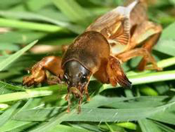 Scientific name: Gryllotalpa gryllotalpa
 Type of pests: Arepolyphagous pest
Order: Orthopteran -Orthoptera
Family: Gryllotalpidae
Widespread in all zones of well-humidified, including irrigated lands. Polyphage.
Damaging: cereals - rice, wheat, rye, barley, corn, oats, etc .; legumes - peas, lentil, beans; perennial grasses; beets, potatoes, carrots, cabbage, watermelons, melons, cucumbers, pumpkins, onions, radishes, eggplants, tomatoes, peppers, earth walnuts, sunflower, flax, tobacco, strawberries; in nurseries and young gardens - apple, pear, plum, cherry, cherry, apricot, peach; oak, beech, poplar, willow, pine, fir and many other plants. It also feeds on many invertebrates, including harmful insects, rainworms.
Imago is velvety brown, bottom yellowish color. Body length - 35 - 50 mm. The foreheads are mines, short, extended, with strong teeth. The hind legs have 3 to 4 spiers on the inside.
Overgrown short, reaching half the length of the abdomen, leathery, with a net of thick veins. The wings are developed, transparent, with a thick net of veins, in a calm condition, in the form of flagella, which stand for the end of the abdomen.
Egg diameter 3 - 3.5 mm, in size and shape resembles the ashy grains, dark, with a light brown plaque and green polish. The larvae are imago, in the I phase to 15 mm, in II - to 20, in III - to 25 and in IV - 35 mm. The number of segments of the antennae is 34, 70, 85 and 100. In the promont (larvae of the IVth phase), the rudiments of the wings appear not less than 2 mm in length, after the fifth and sixth line they reach 7-8 mm. Lives in the surface layer of soil in the holes and only occasionally appears on the surface: late in the evening and at night makes small migrate.
Fine swims and can overcome significant water obstacles. During the flood in the stumps, the remnants of the hay and hunting spit, all breeding of oxen is transported over long distances.
Natural habitats are moistened and rich in humus or bitumen of humus, floodplain of rivers, coastal lakes, places with high manifestations of groundwater, irrigated or well-fertilized fields. Frequent populated gardens. Winter moves at a considerable depth. In adults, they reach 50-100 cm, and in the larvae - 20 - 50 cm in depth. In winter, wolves can be found in manure or humus. The adult insects, nymphs and larvae are wintering. Winter spots go out at different times, due to weather conditions. In the upper layers begin to appear when the soil at a depth of 20 - 30 cm heats up to 8 - 10 C. The mass exit and the beginning of power are observed at a temperature of 12 - 15 C. In spring, after a couple, a woman digs a special earthen chamber at a depth 10 - 20 cm, which accommodates up to 360 eggs. The larvae revive in June - July. When they are settled, they dig underground passages and grow roots of plants, and in the second half of the summer, in the root of beet, weed, potato tubers and other plants..
Particularly dangerous wolves are in the early spring, when they are fed young plants. In August - September, the population of wolves consists of larvae of 3-4 ages and adult insects. However, a number of young larvae migrate to winter. The whole cycle of development in the forest-steppe of Ukraine lasts for about two years, in the northern part - even more.
Protection from pest. In greenhouses for the purpose of destroying Cabbage butterfly are used baits from the diluted corn, wheat and barley grains. For 1 kg of barley take 30 g of sunflower oil and 50 g of insecticide Confidor. The bait in the amount of 30 - 50 g per frame is evenly wrapped in the soil to a depth of 2 - 3 cm. At the farmland, the cappuccino is caught using catching pits.
Pits depth of 60 - 80 cm lay in autumn pus (preferably horse), where insects are collected for winter. In the cold time, the manure is thrown out of the pits and distributed over the soil with a thin layer. At low temperatures cappuccino dying.
The Cabbage butterfly put out on the areas of a distance of 1,5 m green alder branches, which from time to time are replaced by fresh ones.
The scent of snuffled vegetables from the black-eyed peasants makes up the cabbage butterfly. Cabbage does not damage the plants, if before cutting into the fossa to throw a garlic cloves (Pisarenko, Pisarenko, 2000).